Imagen 1 de 16


Galería
Imagen 1 de 16


¿Quieres vender uno?
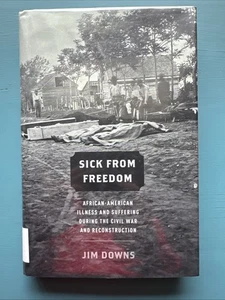
Sick from Freedom 2012 Downs HCDJ African American Illness Emancipation ExLib
24Bookstore
(489)
Vendedor particular
USD23,00
Aproximadamente19,76 EUR
o Mejor oferta
Estado:
- ¡Cómpralo ya!Sick from Freedom 2012 Downs HCDJ African American Illness Emancipation ExLib
Oops! Looks like we're having trouble connecting to our server.
Refresh your browser window to try again.
Recogida:
Recogida local gratis en Collierville, Tennessee, Estados Unidos.
Envío:
USD5,99 (aprox. 5,15 EUR) USPS Media MailTM.
Ubicado en: Collierville, Tennessee, Estados Unidos
Entrega:
Entrega prevista entre el mié. 10 dic. y el lun. 15 dic. a 94104
Devoluciones:
30 días para devoluciones. El vendedor paga el envío de la devolución.
Pagos:
Compra con confianza
Sobre este artículo
El vendedor asume toda la responsabilidad de este anuncio.
N.º de artículo de eBay:357919717562
Características del artículo
- Estado
- Brand
- Unbranded
- Book Title
- Sick from Freedom: African-American Illness and Suffering during
- MPN
- Does not apply
- Features
- 1st Edition, Dust Jacket, Ex-Library
- Country of Origin
- United States
- ISBN
- 9780199758722
Acerca de este producto
Product Identifiers
Publisher
Oxford University Press, Incorporated
ISBN-10
0199758727
ISBN-13
9780199758722
eBay Product ID (ePID)
111396816
Product Key Features
Number of Pages
280 Pages, 320 Pages
Publication Name
Sick from Freedom : African-American Illness and Suffering During the Civil War and Reconstruction
Language
English
Subject
United States / 19th Century, United States / Civil War Period (1850-1877), United States / General
Publication Year
2012
Type
Textbook
Subject Area
History
Format
Hardcover
Dimensions
Item Height
1.1 in
Item Weight
18.4 Oz
Item Length
9.3 in
Item Width
6.4 in
Additional Product Features
Intended Audience
Scholarly & Professional
LCCN
2012-004181
Reviews
"An important challenge to our understanding of an event that scholars and laypeople alike have preferred to see as an uplifting story of newly liberated people vigorously claiming their long-denied rights." -The New York Times "Based on extensive research, particularly in the Freedman''s Bureau''s Medical Division records, the book details the enormity of the public health crisis that afflicted freed people during and after the Civil War... This is revisionist history at its finest, and it deserves a wide audience. Highly recommended."--Choice "Jim Downs'' exceptional research has resulted in a major study ... Highly recommended." --Civil War News "Jim Downs book is unquestionably a story of disruption, deprivation, disease, and death, of the collective failures to intervene, and the ways in which racialized understandings have contributed to such failures. [Downs] work stands as an important contribution to understanding the process of emancipation and the suffering so many freedpeople endured." --North Carolina Historical Review "As Jim Downs makes clear in this carefully documented work, the Union leadership, domestic and military, was wholly unprepared to deal with the breakdown of the system of slavery that followed the Union army with every foray into southern soil. ... However one may ''spin'' the story, one comes away from this book with no doubt that the path out of slavery was a minefield of death and disease that needs its proper acknowledgment in histories of reconstruction." --Journal of the History of Medicine and Allied Sciences "James Downs''Sick from Freedomis a signal contribution to the vastly understudied question of freedpeople''s health and a formidable challenge to the dominant analytical framework that has heretofore framed our understanding both of the transition from slavery to freedom in the American South and the meaning of death and dying in the era of the Civil War. It, quite simply, remaps a field. Against an archival record of statistics--of so many bodies sick or dying and denied access to local and state hospitals and asylums--Downs gives us the story of a people, of individual men, women and children ''dying to be free.''" -- Thavolia Glymph, Duke University "A fresh and ambitious account of the Civil War era that not only interrogates the transition from slavery to freedom in new and unsettling ways but also invites us to rethink the geographical dimensions of Reconstruction." --Steven Hahn, University of Pennsylvania "Jim Downs''sSick from Freedomcharts new, darker, and profoundly revealing paths into the history of the American emancipation in the Civil War. In a work of medical, social, labor, and military history all at once, Downs shows that achieving freedom for American slaves was a signal triumph, but only through a horrible passage of disease, suffering and death. A ''new'' history of emancipation is emerging, and Downs is one of its most talented and innovative craftsmen. This book demonstrates that emancipation is real history and not mere sentimental celebration." --David W. Blight, author ofAmerican Oracle: The Civil War in the Civil Rights Era "InSick from Freedom, Jim Downs paints a startling and little known portrait of African American emancipation in which struggles for health and survival must be factored alongside the political and economic history of the period." --Sharla Fett, Occidental College "Sick from Freedomby Jim Downs traces a shrouded chapter of American history: the mass death and medical devastation that visited African Americans in the immediate wake of legal emancipation. Downs compellingly reveals how the confluence of racial slander, government indifference, and medical malign neglect proved widely fatal, and in doing so he paints a detailed and disheartening portrait of man''s inhumanity to man." --Harriet Washington, author ofMedical Apartheid: The Dark History of Medical Experimentation on Black Americans from Colonial Times to the Present, "Jim Downs'sSick from Freedomcharts new, darker, and profoundly revealing paths into the history of the American emancipation in the Civil War. In a work of medical, social, labor, and military history all at once, Downs shows that achieving freedom for American slaves was a signal triumph, but only through a horrible passage of disease, suffering and death. A 'new' history of emancipation is emerging, and Downs is one of its most talented and innovative craftsmen. This book demonstrates that emancipation is real history and not mere sentimental celebration." --David W. Blight, author ofAmerican Oracle: The Civil War in the Civil Rights Era "InSick from Freedom, Jim Downs paints a startling and little known portrait of African American emancipation in which struggles for health and survival must be factored alongside the political and economic history of the period." --Sharla Fett, Occidental College "Sick from Freedomby Jim Downs traces a shrouded chapter of American history: the mass death and medical devastation that visited African Americans in the immediate wake of legal emancipation. Downs compellingly reveals how the confluence of racial slander, government indifference, and medical malign neglect proved widely fatal, and in doing so he paints a detailed and disheartening portrait of man's inhumanity to man." --Harriet Washington, author ofMedical Apartheid: The Dark History of Medical Experimentation on Black Americans from Colonial Times to the Present "James Downs'Sick from Freedomis a signal contribution to the vastly understudied question of freedpeople's health and a formidable challenge to the dominant analytical framework that has heretofore framed our understanding both of the transition from slavery to freedom in the American South and the meaning of death and dying in the era of the Civil War. It, quite simply, remaps a field. Against an archival record of statistics--of so many bodies sick or dying and denied access to local and state hospitals and asylums--Downs gives us the story of a people, of individual men, women and children 'dying to be free.'" -- Thavolia Glymph, Duke University "A fresh and ambitious account of the Civil War era that not only interrogates the transition from slavery to freedom in new and unsettling ways but also invites us to rethink the geographical dimensions of Reconstruction." --Steven Hahn, University of Pennsylvania, "An important challenge to our understanding of an event that scholars and laypeople alike have preferred to see as an uplifting story of newly liberated people vigorously claiming their long-denied rights." -The New York Times "InSick from Freedom, Jim Downs paints a startling and little known portrait of African American emancipation in which struggles for health and survival must be factored alongside the political and economic history of the period." --Sharla Fett, Occidental College "Sick from Freedomby Jim Downs traces a shrouded chapter of American history: the mass death and medical devastation that visited African Americans in the immediate wake of legal emancipation. Downs compellingly reveals how the confluence of racial slander, government indifference, and medical malign neglect proved widely fatal, and in doing so he paints a detailed and disheartening portrait of man's inhumanity to man." --Harriet Washington, author ofMedical Apartheid: The Dark History of Medical Experimentation on Black Americans from Colonial Times to the Present "James Downs'Sick from Freedomis a signal contribution to the vastly understudied question of freedpeople's health and a formidable challenge to the dominant analytical framework that has heretofore framed our understanding both of the transition from slavery to freedom in the American South and the meaning of death and dying in the era of the Civil War. It, quite simply, remaps a field. Against an archival record of statistics--of so many bodies sick or dying and denied access to local and state hospitals and asylums--Downs gives us the story of a people, of individual men, women and children 'dying to be free.'" -- Thavolia Glymph, Duke University "A fresh and ambitious account of the Civil War era that not only interrogates the transition from slavery to freedom in new and unsettling ways but also invites us to rethink the geographical dimensions of Reconstruction." --Steven Hahn, University of Pennsylvania "Jim Downs'sSick from Freedomcharts new, darker, and profoundly revealing paths into the history of the American emancipation in the Civil War. In a work of medical, social, labor, and military history all at once, Downs shows that achieving freedom for American slaves was a signal triumph, but only through a horrible passage of disease, suffering and death. A 'new' history of emancipation is emerging, and Downs is one of its most talented and innovative craftsmen. This book demonstrates that emancipation is real history and not mere sentimental celebration." --David W. Blight, author ofAmerican Oracle: The Civil War in the Civil Rights Era, "An important challenge to our understanding of an event that scholars and laypeople alike have preferred to see as an uplifting story of newly liberated people vigorously claiming their long-denied rights." -The New York Times "Based on extensive research, particularly in the Freedman's Bureau's Medical Division records, the book details the enormity of the public health crisis that afflicted freed people during and after the Civil War .This is revisionist history at its finest, and it deserves a wide audience."--Choice "Jim Downs' exceptional research has resulted in a major study ... Highly recommended." --Civil War News "As Jim Downs makes clear in this carefully documented work, the Union leadership, domestic and military, was wholly unprepared to deal with the breakdown of the system of slavery that followed the Union army with every foray into southern soil. ... However one may 'spin' the story, one comes away from this book with no doubt that the path out of slavery was a minefield of death and disease that needs its proper acknowledgment in histories of reconstruction." --Journal of the History of Medicine and Allied Sciences "James Downs'Sick from Freedomis a signal contribution to the vastly understudied question of freedpeople's health and a formidable challenge to the dominant analytical framework that has heretofore framed our understanding both of the transition from slavery to freedom in the American South and the meaning of death and dying in the era of the Civil War. It, quite simply, remaps a field. Against an archival record of statistics--of so many bodies sick or dying and denied access to local and state hospitals and asylums--Downs gives us the story of a people, of individual men, women and children 'dying to be free.'" -- Thavolia Glymph, Duke University "A fresh and ambitious account of the Civil War era that not only interrogates the transition from slavery to freedom in new and unsettling ways but also invites us to rethink the geographical dimensions of Reconstruction." --Steven Hahn, University of Pennsylvania "Jim Downs'sSick from Freedomcharts new, darker, and profoundly revealing paths into the history of the American emancipation in the Civil War. In a work of medical, social, labor, and military history all at once, Downs shows that achieving freedom for American slaves was a signal triumph, but only through a horrible passage of disease, suffering and death. A 'new' history of emancipation is emerging, and Downs is one of its most talented and innovative craftsmen. This book demonstrates that emancipation is real history and not mere sentimental celebration." --David W. Blight, author ofAmerican Oracle: The Civil War in the Civil Rights Era "InSick from Freedom, Jim Downs paints a startling and little known portrait of African American emancipation in which struggles for health and survival must be factored alongside the political and economic history of the period." --Sharla Fett, Occidental College "Sick from Freedomby Jim Downs traces a shrouded chapter of American history: the mass death and medical devastation that visited African Americans in the immediate wake of legal emancipation. Downs compellingly reveals how the confluence of racial slander, government indifference, and medical malign neglect proved widely fatal, and in doing so he paints a detailed and disheartening portrait of man's inhumanity to man." --Harriet Washington, author ofMedical Apartheid: The Dark History of Medical Experimentation on Black Americans from Colonial Times to the Present, "An important challenge to our understanding of an event that scholars and laypeople alike have preferred to see as an uplifting story of newly liberated people vigorously claiming their long-denied rights." -The New York Times "Jim Downs' exceptional research has resulted in a major study ... Highly recommended." --Civil War News "As Jim Downs makes clear in this carefully documented work, the Union leadership, domestic and military, was wholly unprepared to deal with the breakdown of the system of slavery that followed the Union army with every foray into southern soil. ... However one may 'spin' the story, one comes away from this book with no doubt that the path out of slavery was a minefield of death and disease that needs its proper acknowledgment in histories of reconstruction." --Journal of the History of Medicine and Allied Sciences "James Downs'Sick from Freedomis a signal contribution to the vastly understudied question of freedpeople's health and a formidable challenge to the dominant analytical framework that has heretofore framed our understanding both of the transition from slavery to freedom in the American South and the meaning of death and dying in the era of the Civil War. It, quite simply, remaps a field. Against an archival record of statistics--of so many bodies sick or dying and denied access to local and state hospitals and asylums--Downs gives us the story of a people, of individual men, women and children 'dying to be free.'" -- Thavolia Glymph, Duke University "A fresh and ambitious account of the Civil War era that not only interrogates the transition from slavery to freedom in new and unsettling ways but also invites us to rethink the geographical dimensions of Reconstruction." --Steven Hahn, University of Pennsylvania "Jim Downs'sSick from Freedomcharts new, darker, and profoundly revealing paths into the history of the American emancipation in the Civil War. In a work of medical, social, labor, and military history all at once, Downs shows that achieving freedom for American slaves was a signal triumph, but only through a horrible passage of disease, suffering and death. A 'new' history of emancipation is emerging, and Downs is one of its most talented and innovative craftsmen. This book demonstrates that emancipation is real history and not mere sentimental celebration." --David W. Blight, author ofAmerican Oracle: The Civil War in the Civil Rights Era, Historian Downs (Connecticut College) carefully investigates this this topic from varying angles, and in doing so provides a fresh perspective on African American history and the era of the Civil War and Reconstruction., "An important challenge to our understanding of an event that scholars and laypeople alike have preferred to see as an uplifting story of newly liberated people vigorously claiming their long-denied rights." - The New York Times "A major turning point in how we understand the African-American past, the nation''s past, and their intertwining." - The Journal of Interdisciplinary History "Based on extensive research, particularly in the Freedman''s Bureau''s Medical Division records, the book details the enormity of the public health crisis that afflicted freed people during and after the Civil War... This is revisionist history at its finest, and it deserves a wide audience. Highly recommended."--Choice "Jim Downs'' exceptional research has resulted in a major study ... Highly recommended." --Civil War News "Sick from Freedom is a welcome addition to the literature on the history of the Civil War and Reconstruction, medicine, and public health... thought-provoking." --The Journal of American History "ick from Freedom is beautifully written... The author dedicates this work to ''all those who were emancipated but never made it to freedom'' (p. v). He honors their memories in this excellent and haunting book." --Arkansas Historical Quarterly "As Jim Downs makes clear in this carefully documented work, the Union leadership, domestic and military, was wholly unprepared to deal with the breakdown of the system of slavery that followed the Union army with every foray into southern soil. ... One comes away from this book with no doubt that the path out of slavery was a minefield of death and disease that needs its proper acknowledgment in histories of reconstruction." -- Journal of the History of Medicine and Allied Sciences "A signal contribution to the vastly understudied question of freedpeople''s health and a formidable challenge to the dominant analytical framework that has heretofore framed our understanding both of the transition from slavery to freedom in the American South and the meaning of death and dying in the era of the Civil War. It, quite simply, remaps a field.''" -- Thavolia Glymph, Duke University "A fresh and ambitious account of the Civil War era that not only interrogates the transition from slavery to freedom in new and unsettling ways but also invites us to rethink the geographical dimensions of Reconstruction." --Steven Hahn, University of Pennsylvania "Charts new, darker, and profoundly revealing paths into the history of the American emancipation in the Civil War. In a work of medical, social, labor, and military history all at once, Downs shows that achieving freedom for American slaves was a signal triumph, but only through a horrible passage of disease, suffering and death. A ''new'' history of emancipation is emerging, and Downs is one of its most talented and innovative craftsmen." --David W. Blight, author of American Oracle: The Civil War in the Civil Rights Era "Jim Downs paints a startling and little known portrait of African American emancipation in which struggles for health and survival must be factored alongside the political and economic history of the period." --Sharla Fett, Occidental College "Traces a shrouded chapter of American history: the mass death and medical devastation that visited African Americans in the immediate wake of legal emancipation. Downs compellingly reveals how the confluence of racial slander, government indifference, and medical malign neglect proved widely fatal, and in doing so he paints a detailed and disheartening portrait of man''s inhumanity to man." --Harriet Washington, author of Medical Apartheid: The Dark History of Medical Experimentation on Black Americans from Colonial Times to the Present "An important contribution to understanding the process of emancipation and the suffering so many freedpeople endured." --North Carolina Historical Review, "An important challenge to our understanding of an event that scholars and laypeople alike have preferred to see as an uplifting story of newly liberated people vigorously claiming their long-denied rights." - The New York Times "A major turning point in how we understand the African-American past, the nation's past, and their intertwining." - The Journal of Interdisciplinary History "Based on extensive research, particularly in the Freedman's Bureau's Medical Division records, the book details the enormity of the public health crisis that afflicted freed people during and after the Civil War... This is revisionist history at its finest, and it deserves a wide audience. Highly recommended."--Choice "Jim Downs' exceptional research has resulted in a major study ... Highly recommended." --Civil War News "As Jim Downs makes clear in this carefully documented work, the Union leadership, domestic and military, was wholly unprepared to deal with the breakdown of the system of slavery that followed the Union army with every foray into southern soil. ... One comes away from this book with no doubt that the path out of slavery was a minefield of death and disease that needs its proper acknowledgment in histories of reconstruction." -- Journal of the History of Medicine and Allied Sciences "A signal contribution to the vastly understudied question of freedpeople's health and a formidable challenge to the dominant analytical framework that has heretofore framed our understanding both of the transition from slavery to freedom in the American South and the meaning of death and dying in the era of the Civil War. It, quite simply, remaps a field.'" -- Thavolia Glymph, Duke University "A fresh and ambitious account of the Civil War era that not only interrogates the transition from slavery to freedom in new and unsettling ways but also invites us to rethink the geographical dimensions of Reconstruction." --Steven Hahn, University of Pennsylvania "Charts new, darker, and profoundly revealing paths into the history of the American emancipation in the Civil War. In a work of medical, social, labor, and military history all at once, Downs shows that achieving freedom for American slaves was a signal triumph, but only through a horrible passage of disease, suffering and death. A 'new' history of emancipation is emerging, and Downs is one of its most talented and innovative craftsmen." --David W. Blight, author of American Oracle: The Civil War in the Civil Rights Era "Jim Downs paints a startling and little known portrait of African American emancipation in which struggles for health and survival must be factored alongside the political and economic history of the period." --Sharla Fett, Occidental College "Traces a shrouded chapter of American history: the mass death and medical devastation that visited African Americans in the immediate wake of legal emancipation. Downs compellingly reveals how the confluence of racial slander, government indifference, and medical malign neglect proved widely fatal, and in doing so he paints a detailed and disheartening portrait of man's inhumanity to man." --Harriet Washington, author of Medical Apartheid: The Dark History of Medical Experimentation on Black Americans from Colonial Times to the Present "An important contribution to understanding the process of emancipation and the suffering so many freedpeople endured." --North Carolina Historical Review
Dewey Edition
23
Number of Volumes
1 vol.
Illustrated
Yes
Dewey Decimal
613.089/96073
Table Of Content
AcknowledgmentsIntroduction1. Dying to be Free: The Unexpected Medical Crises of War and Emancipation2. The Anatomy of Emancipation: The Economics of Freedpeople's Heath, 1862-18653. Freedmen's Hospitals4. Smallpox among Former Slaves, 1862-18685. The Healing Power of Labor: Disabled, Orphaned, Elderly, and Female Freed Slaves in the Postwar South, 1866-18686. Freedpeople's Health Claims at Reconstruction's End7. Reconstructing the West: Native American Health in the Postwar YearsConclusionNotesBibliographyIndex, Acknowledgments Introduction 1. Dying to be Free: The Unexpected Medical Crises of War and Emancipation 2. The Anatomy of Emancipation: The Creation of a Healthy Labor Force 3. Freedmen's Hospitals: The Medical Division of the Freedmen's Bureau 4. Reconstructing an Epidemic: Smallpox among Former Slaves, 1862-1868 5. The Healing Power of Labor: Dependent, Disabled, Orphaned, Elderly, and Female Freed Slaves in the Postwar South 6. Narrating Illness: Freedpeople's Health Claims at Reconstruction's End Conclusion Epilogue Notes Bibliography Index
Synopsis
Bondspeople who fled from slavery during and after the Civil War did not expect that their flight toward freedom would lead to sickness, disease, suffering, and death. But the war produced the largest biological crisis of the nineteenth century, and as historian Jim Downs reveals in this groundbreaking volume, it had deadly consequences for hundreds of thousands of freed people. In Sick from Freedom, Downs recovers the untold story of one of the bitterest ironies in American history--that the emancipation of the slaves, seen as one of the great turning points in U.S. history, had devastating consequences for innumerable freed people. Drawing on massive new research into the records of the Medical Division of the Freedmen's Bureau-a nascent national health system that cared for more than one million freed slaves-he shows how the collapse of the plantation economy released a plague of lethal diseases. With emancipation, African Americans seized the chance to move, migrating as never before. But in their journey to freedom, they also encountered yellow fever, smallpox, cholera, dysentery, malnutrition, and exposure. To address this crisis, the Medical Division hired more than 120 physicians, establishing some forty underfinanced and understaffed hospitals scattered throughout the South, largely in response to medical emergencies. Downs shows that the goal of the Medical Division was to promote a healthy workforce, an aim which often excluded a wide range of freedpeople, including women, the elderly, the physically disabled, and children. Downs concludes by tracing how the Reconstruction policy was then implemented in the American West, where it was disastrously applied to Native Americans. The widespread medical calamity sparked by emancipation is an overlooked episode of the Civil War and its aftermath, poignantly revealed in Sick from Freedom., Sick from Freedom provides the first study of the health conditions of emancipated slaves and reveals the epidemics, illnesses, and poverty that former slaves suffered from when slavery ended and freedom began., Bondspeople who fled from slavery during and after the Civil War did not expect that their flight toward freedom would lead to sickness, disease, suffering, and death. But the war produced the largest biological crisis of the nineteenth century, and as historian Jim Downs reveals in this groundbreaking volume, it had deadly consequences for hundreds of thousands of freed people.In Sick from Freedom, Downs recovers the untold story of one of the bitterest ironies in American history - that the emancipation of the slaves, seen as one of the great turning points in U.S. history, had devastating consequences for innumerable freedpeople. Drawing on massive new research into the records of the Medical Division of the Freedmen's Bureau - a nascent national health system that cared for more than 500,000 freed slaves - he shows how the collapse of the plantation economy released a plague of lethal diseases. With emancipation, African Americans seized the chance to move, migrating as never before. But in their journey to freedom, they also encountered yellow fever, smallpox, cholera, dysentery, malnutrition, and exposure. To address this crisis, the Medical Division hired more than 120 physicians, establishing some forty underfinanced and understaffed hospitals scattered throughout the South, largely in response to medical emergencies. Downs shows that the goal of the Medical Division was to promote a healthy workforce, an aim which often excluded a wide range of freedpeople, including women, the elderly, the physically disabled, and children. Downs concludes by tracing how the Reconstruction policy was then implemented in the American West, where it was disastrously applied to Native Americans. The widespread medical calamity sparked by emancipation is an overlooked episode of the Civil War and its aftermath, poignantly revealed in Sick from Freedom., Bondspeople who fled from slavery during and after the Civil War did not expect that their flight toward freedom would lead to sickness, disease, suffering, and death. But the war produced the largest biological crisis of the nineteenth century, and as historian Jim Downs reveals in this groundbreaking volume, it had deadly consequences for hundreds of thousands of freed people. In Sick from Freedom , Downs recovers the untold story of one of the bitterest ironies in American history--that the emancipation of the slaves, seen as one of the great turning points in U.S. history, had devastating consequences for innumerable freed people. Drawing on massive new research into the records of the Medical Division of the Freedmen's Bureau-a nascent national health system that cared for more than one million freed slaves-he shows how the collapse of the plantation economy released a plague of lethal diseases. With emancipation, African Americans seized the chance to move, migrating as never before. But in their journey to freedom, they also encountered yellow fever, smallpox, cholera, dysentery, malnutrition, and exposure. To address this crisis, the Medical Division hired more than 120 physicians, establishing some forty underfinanced and understaffed hospitals scattered throughout the South, largely in response to medical emergencies. Downs shows that the goal of the Medical Division was to promote a healthy workforce, an aim which often excluded a wide range of freedpeople, including women, the elderly, the physically disabled, and children. Downs concludes by tracing how the Reconstruction policy was then implemented in the American West, where it was disastrously applied to Native Americans. The widespread medical calamity sparked by emancipation is an overlooked episode of the Civil War and its aftermath, poignantly revealed in Sick from Freedom ., Bondspeople who fled from slavery during and after the Civil War did not expect that their flight toward freedom would lead to sickness, disease, suffering, and death. But the war produced the largest biological crisis of the nineteenth century, and as historian Jim Downs reveals in this groundbreaking volume, it had deadly consequences for hundreds of thousands of freed people. In Sick from Freedom, Downs recovers the untold story of one of the bitterest ironies in American history--that the emancipation of the slaves, seen as one of the great turning points in U.S. history, had devastating consequences for innumerable freedpeople. Drawing on massive new research into the records of the Medical Division of the Freedmen's Bureau--a nascent national health system that cared for more than 500,000 freed slaves--he shows how the collapse of the plantation economy released a plague of lethal diseases. With emancipation, African Americans seized the chance to move, migrating as never before. But in their journey to freedom, they also encountered yellow fever, smallpox, cholera, dysentery, malnutrition, and exposure. To address this crisis, the Medical Division hired more than 120 physicians, establishing some forty underfinanced and understaffed hospitals scattered throughout the South, largely in response to medical emergencies. Downs shows that the goal of the Medical Division was to promote a healthy workforce, an aim which often excluded a wide range of freedpeople, including women, the elderly, the physically disabled, and children. Downs concludes by tracing how the Reconstruction policy was then implemented in the American West, where it was disastrously applied to Native Americans. The widespread medical calamity sparked by emancipation is an overlooked episode of the Civil War and its aftermath, poignantly revealed in Sick from Freedom.
LC Classification Number
E540.N3
Descripción del artículo del vendedor
Acerca de este vendedor
24Bookstore
100% de votos positivos•835 artículos vendidos
Registrado como vendedor particularPor tanto, no se aplican los derechos de los consumidores derivados de las leyes de protección de los consumidores de la UE. La Garantía al cliente de eBay sigue aplicando a la mayoría de compras. Más informaciónMás información
Votos de vendedor (561)
- o***a (145)- Votos emitidos por el comprador.Últimos 6 mesesCompra verificadaThis was a fantastic purchase from this seller and I can’t be more pleased. The book arrived in excellent condition and the purchase price and shipping costs were extremely reasonable. The seller packaged and shipped the book with care so it looks fantastic, just like the photographs in the listing. The high quality of the book’s printing and binding are very impressive, and the seller included a Mylar jacket cover which I appreciate. I highly recommend this seller for your next book buy.
- 1***b (2490)- Votos emitidos por el comprador.Mes pasadoCompra verificadaMy item arrived very quickly well packaged and on time. It was just described, and the seller was very easy to work with. It was a great value and can't wait to work with him again.
- v***g (522)- Votos emitidos por el comprador.Últimos 6 mesesCompra verificadaPacked with great care, and shipped first class, which was quite thoughtful since I do not live on the continent. The book was certainly as described, but really more like new. The seller was kind enough to work with me to help make the purchase possible, so it was a great value. I am very satisfied with my purchase.Folio Society The First Colonists Hakluyt’s Voyages To North America Illustrated (#357201096568)
Más que explorar:
- Libros prácticos y de consulta africanos,
- Cómics y novelas gráficas americanos de año de publicación 2012,
- Cómics y novelas gráficas americanos superheroicos Año de publicación 2012,
- Cómics americanos,
- Cómics y novelas gráficas americanos,
- Cómics y novelas gráficas americanos marvel comics,
- Cómics y novelas gráficas americanos acciones,
- Cómics y novelas gráficas americanos los cuatro fantásticos,
- Cómics y novelas gráficas americanos en inglés,
- Cómics y novelas gráficas americanos sin firmado